close
Choose Your Site
Global
Social Media
Views: 0 Author: Site Editor Publish Time: 2026-09-08 Origin: Site


Specifying a protective venting component presents a critical engineering reality. You must balance unimpeded gas venting against absolute flame quenching. Failure to achieve this equilibrium often results in catastrophic thermal runaway. In worst-case scenarios, it causes a violent enclosure explosion. We must move past basic definitions when designing modern energy storage systems. Today's applications range from heavy industrial UPS units to advanced EV battery packs. They demand precise gas permeability. They also require robust chemical resistance, especially when operating in highly volatile, hydrogen-rich environments. The engineering stakes are simply too high for guesswork or assumptions. This article outlines how you can effectively evaluate and shortlist the right component. You will learn to navigate complex chemical compatibility metrics, analyze flow dynamics, and overcome tight integration constraints. You can achieve this optimal design without compromising strict regulatory compliance. Mastering these technical elements ensures your battery enclosures remain both safe and fully functional.
Standard industrial arrestors are rarely suitable for battery enclosures due to specific acid exposure and micro-venting requirements.
Material selection must balance hydrophobic properties, acid resistance, and thermal mass.
Venting performance requires a documented flow-rate-to-pressure-drop ratio to prevent enclosure deformation.
Custom form factors are often necessary to ensure a hermetic seal in high-density battery pack designs.
Compliance (UL, IEC, ATEX) relies not just on the component, but on the validation of the final assembly seal.
Energy storage systems inherently produce dangerous gases. You must understand the deflagration risks associated with this off-gassing process. During aggressive charge and discharge cycles, batteries generate hydrogen and oxygen. They often produce these gases in a highly volatile stoichiometric mix. A single spark can ignite this mixture instantly. Off-the-shelf industrial parts cannot manage this specific gas generation profile. They lack the precision required for energy storage environments.
Lead-acid chemistries pose a distinctly aggressive challenge. These systems constantly vent corrosive sulfuric acid aerosols alongside explosive gases. You must deploy a specialized acid-lead battery flame arrestor to survive this environment. Standard wire meshes corrode almost immediately upon exposure. Even standard sintered metals degrade heavily over time. Acid attacks the micro-structures of generic metals. This degradation widens the pore sizes. Widened pores eventually allow flames to pass right through the barrier.
Many design engineers fall for the false economy of "universal" parts. They attempt to repurpose generic pipeline or chemical tank arrestors for battery enclosures. This mistake introduces severe operational risks. Generic pipeline arrestors feature inappropriate pore sizes for micro-venting applications. They restrict natural gas flow too much. This restriction causes massive back-pressure buildup inside sealed battery cases. Conversely, if the pores are too large, they fail to quench high-velocity hydrogen flames. You must match the component specifically to the battery's unique thermal runaway profile.
Assuming a generic industrial breather vent will double as a certified flame quenching device.
Ignoring the cumulative effect of acid vapor on untreated metal screens.
Failing to calculate the maximum potential gas release volume during a complete short-circuit event.
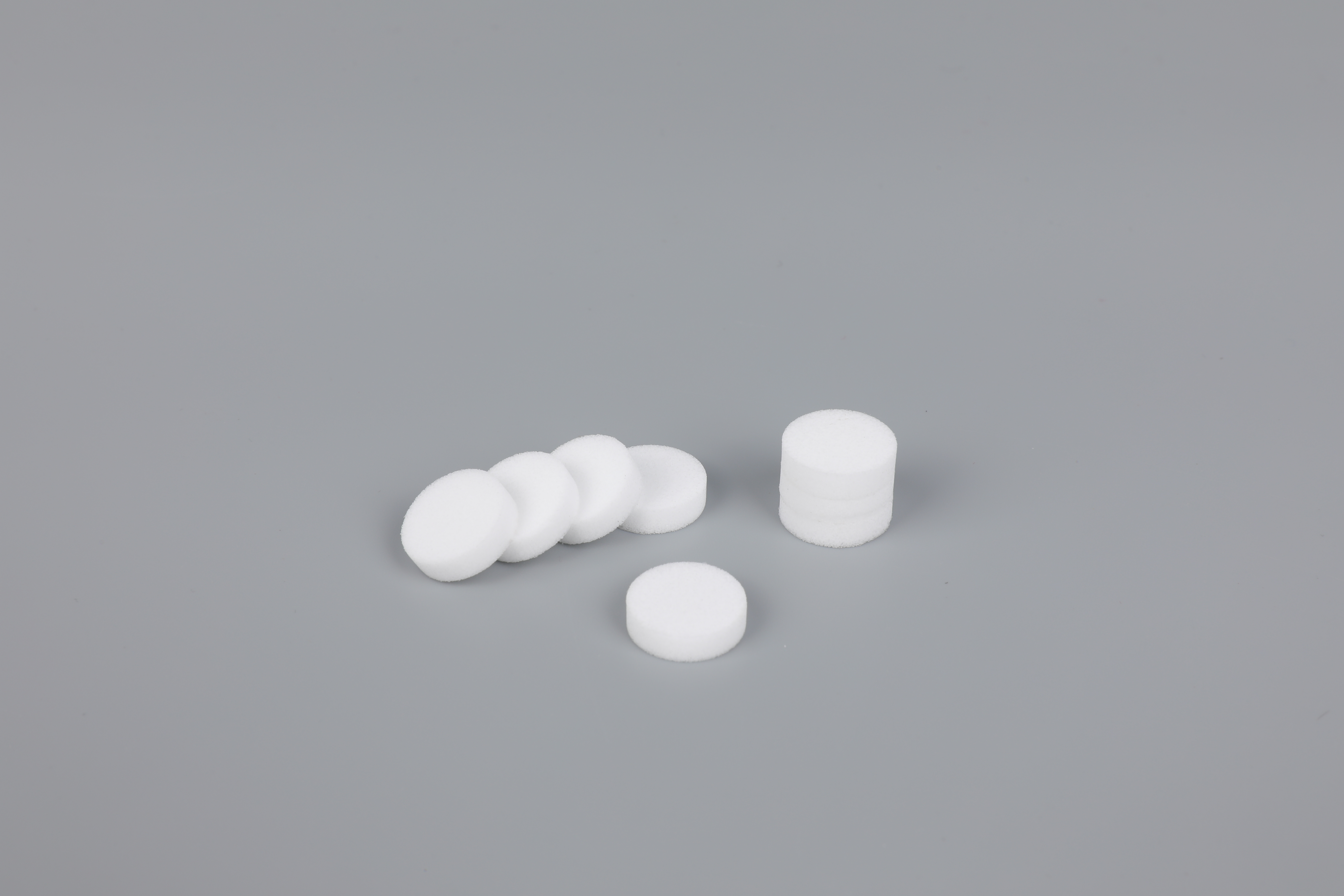
Material science dictates the success or failure of your safety mechanisms. You must choose base materials that withstand specific electrolyte chemistries. Sintered polymers, such as PTFE and specialized Polyethylene, offer immense advantages. They boast excellent chemical resistance against harsh acids. These polymers are intrinsically hydrophobic. They naturally repel water and liquid acid while allowing gas to pass freely. Furthermore, they keep the overall system weight exceptionally low. However, polymers do possess drawbacks. They exhibit lower structural integrity under extreme mechanical stress compared to heavy metals. They may deform if subjected to massive external crushing forces.
Sintered stainless steel and porous metals present a different set of benefits. They provide a high thermal mass. This superior thermal mass ensures rapid heat dissipation. Fast heat transfer is critical for rapid flame quenching during a deflagration event. Porous metals also offer robust physical strength against impacts. Yet, they bring specific disadvantages. Metals add significant weight to the assembly. They are highly susceptible to galvanic corrosion depending on the surrounding electrolyte. You must specify exact alloys, such as 316L stainless steel, to prevent premature rust. A reliable battery flame arrestor design maps these material properties directly to your application.
You need a structured approach to evaluate these options. Map your material choices directly to the specific battery chemistry. Lithium-ion systems produce different off-gassing profiles than traditional lead-acid units. Lithium systems often release complex hydrocarbons and toxic fluorides during thermal runaway. Lead-acid systems primarily release hydrogen and sulfuric acid vapor. You must anticipate the expected environmental lifecycle. Consider extreme temperature fluctuations and humidity levels in your final deployment area.
Material Decision Matrix for Energy Storage Systems
Material Type | Primary Advantage | Primary Limitation | Best Fit Battery Chemistry | Typical Application Environment |
|---|---|---|---|---|
Sintered PTFE / PE | Intrinsically hydrophobic, high acid resistance | Lower mechanical crush resistance | Lead-Acid, VRLA | Stationary UPS, Telecom backups |
Sintered 316L Stainless Steel | High thermal mass for rapid quenching | Heavier, potential for galvanic corrosion | Lithium-ion | EV battery packs, High-impact zones |
Treated Porous Bronze | Cost-effective thermal dissipation | Poor resistance to strong acids | Standard Alkaline | Consumer electronics, Light industrial |
Engineers face a constant battle between permeability and pore size. These two critical factors share a strict inverse relationship. Smaller pores dramatically improve flame quenching capabilities. They break down the flame front and stop propagation dead in its tracks. However, these same microscopic pores heavily restrict natural airflow. Restricted airflow leads directly to internal pressure accumulation. If the pressure exceeds the enclosure's structural limits, the casing will rupture.
When specifying a battery vent flame arrestor, you must define acceptable pressure drop thresholds. You derive these thresholds directly from your IP-rated housing specifications. A rigid aluminum EV enclosure handles internal pressure differently than a molded plastic UPS casing. You must learn how to read manufacturer flow-rate curves accurately. These curves plot airflow volume against differential pressure. You need a component that vents normal operational gases at minimal pressure while remaining restrictive enough to stop an explosive flame front.
Fouling risks constantly threaten long-term venting efficiency. Environmental dust clogs exterior pores over time. Crystallized electrolytes block internal microscopic pathways. Once the pores clog, the component stops venting. You must demand oleophobic and hydrophobic treatments for your components. These specialized surface treatments prevent water, oil, and acid from adhering to the porous structure. This self-cleaning property maintains vital gas permeability throughout the product's entire operational lifespan.
Identify the Baseline Pressure: Locate your enclosure's maximum safe internal operating pressure on the X-axis.
Map the Required Volume: Determine the liters-per-minute (LPM) of gas generated during peak off-gassing on the Y-axis.
Find the Intersection: Ensure the chosen component's curve sits comfortably above your required LPM at your maximum safe pressure.
Account for Fouling Margins: Add a 20% safety margin to your flow requirements to account for expected lifecycle dust accumulation.
Modern battery designs rarely accommodate bulky, standard components. High-density pack designs pack cells tightly to maximize energy density. This leaves virtually no room for standard threaded fixtures. You face severe integration constraints in EV chassis and compact marine applications. A standard off-the-shelf part simply will not fit mechanically. In these scenarios, you must specify a custom battery flame arrestor. Custom form factors ensure a perfect hermetic seal within incredibly complex enclosure geometries.
Your chosen assembly method dictates the physical design of the custom part. Different integration techniques offer unique structural benefits. Ultrasonic welding proves ideal for integrating porous plastics directly into battery casing molds. This method creates a seamless, watertight bond without requiring secondary adhesives. Conversely, press-fit or insert molding works best for robust metal disks. Insert molding encapsulates the metal matrix directly into the plastic housing during injection. This creates an incredibly strong mechanical interlock capable of surviving intense vibration.
You must adopt a rigorous prototyping and shortlisting logic. Never leave safety component integration to the final stages of product development. Retrofitting an arrestor onto a finished design usually compromises the IP rating. Advise your engineering teams to request CAD models immediately. Obtain physical samples early in the design phase. You need these samples for extensive form-fit-function testing. Testing physical prototypes uncovers hidden clearance issues and seal weaknesses before you commit to expensive manufacturing tooling.
Ultrasonic Welding: Best for high-volume polymer assemblies. Fast cycle times. Requires compatible thermoplastic housings.
Insert Molding: Maximum structural strength. Ideal for metal porous media. Higher initial tooling costs.
O-Ring Press Fit: Easy to service and replace. Requires tight machining tolerances. Susceptible to elastomer degradation over time.
Adhesive Bonding: Highly flexible for complex shapes. Requires strict chemical compatibility checks between the adhesive and battery electrolytes.
Regulatory lenses define the baseline safety of your energy storage system. You cannot bring a battery pack to market without extensive compliance documentation. Components must meet UL 94 V-0 standards for flammability. This ensures the plastic housings will self-extinguish and will not propagate a secondary fire. Enclosures typically demand IP67 or IP68 ratings for absolute water and dust ingress protection. Your venting component must maintain this strict IP rating while still allowing gases to escape. Furthermore, the entire assembly must align with relevant IEC standards, such as IEC 62619, which governs the safe operation of secondary lithium cells.
Engineers frequently underestimate the critical "bypass" risk. An implementation reality states a flame arrestor remains completely useless if the seal around it fails. If gas or flames find a path of least resistance around the porous media, the system will explode. You must prioritize leak-testing at the exact point of integration. Watch out for hidden gasket degradation caused by chemical exposure. Inspect assemblies for weld micro-cracks induced by thermal cycling. The component might be flawless, but a failed O-ring compromises the entire enclosure.
You must avoid exaggerated marketing claims from unverified suppliers. Remind your procurement buyers to look for verifiable testing data. Reject generic labels claiming parts are "100% explosion-proof." Real engineering requires data. Demand specific gas-group detonation test reports. A component tested against methane might fail spectacularly against a hydrogen deflagration. Request documentation proving the device quenches flames under your specific application's maximum expected pressure and gas concentration.
Successful specification requires aligning your material chemistry directly with required gas flow rates and specific assembly methods. You cannot isolate one variable without compromising the others. An overly restrictive pore size stops flames but bursts the enclosure. A chemically incompatible material vents perfectly until acid destroys it entirely. You must treat the venting mechanism and its surrounding seal as a single, holistic safety system.
Your next steps involve rigorous data collection. Calculate the maximum potential venting volume your battery cells could produce during a cascading thermal runaway event. Audit your enclosure's available internal space to determine integration constraints. Request comprehensive material compatibility charts from your shortlisted suppliers. Cross-reference these charts against your specific electrolyte chemistry.
Do not attempt to solve complex deflagration risks alone. We encourage you to consult directly with specialized application engineers. They possess the experience necessary to map your specific thermal runaway profiles to appropriate custom or semi-custom designs. Securing expert guidance early in the design cycle guarantees safety, ensures regulatory compliance, and prevents catastrophic failures in the field.
A: We test effectiveness using spark-ignition trials within a controlled gas-mixture chamber. Engineers flood the chamber with a specific stoichiometric mix, usually hydrogen and air. A spark plug ignites the gas on one side of the component. Sensors on the opposite side verify that no flame propagation occurs and record the resulting differential pressure.
A: Lifespan varies based on acid concentration and environmental extremes. In standard standby applications, they typically last 5 to 7 years. However, high-cycle environments accelerate acid exposure, reducing lifespan. You must establish strict preventive maintenance schedules to inspect for pore crystallization and structural degradation.
A: Properly specified components do not degrade your IP rating. By utilizing advanced hydrophobic and oleophobic membrane treatments, the porous structure repels liquid water and fine dust. This specialized engineering allows continuous gas venting while fully maintaining stringent IP67 or IP68 water and dust resistance standards.