close
Choose Your Site
Global
Social Media
Views: 0 Author: Site Editor Publish Time: 2026-09-22 Origin: Site


High-sensitivity assays like qPCR and next-generation sequencing amplify more than just target DNA. They also amplify the severe consequences of undetected aerosol contamination. A single stray droplet can quickly ruin an entire batch of precious samples. This leads to massive data integrity issues and wasted laboratory hours. While standard tips suffice for basic liquid handling tasks, contamination-sensitive workflows require engineered physical barriers. These robust barriers prevent sample carryover and actively protect the delicate pipette shaft from harmful aerosols. Using the wrong consumable exposes your entire workflow to hidden risks.
This guide provides a technical and procurement-focused framework for your team. You will learn exactly how to evaluate, specify, and validate proper laboratory consumables. We will help you ensure absolute assay integrity without ever compromising liquid dispensing accuracy.
Aerosol contamination in PCR workflows is primarily mitigated by using high-density, hydrophobic filter pipette tips that block vapor and liquid bypass.
Not all filters are equal; procurement must evaluate pore size, filter material purity, and the absence of sealing additives that can inhibit PCR reactions.
Specifying sterile filter pipette tips requires verifying lot-specific Certificates of Analysis (CoA) for RNase, DNase, human DNA, and endotoxin-free guarantees.
Successful implementation requires balancing filter density with pipette calibration to avoid pressure-drop variations that impact dispensing accuracy.
Cross-contamination in molecular workflows creates compounding operational expenses. Reagents for next-generation sequencing and qPCR remain incredibly expensive. When aerosol contamination occurs, laboratories waste these costly materials on compromised runs. False positives ruin entire clinical batches. They delay critical research outcomes. Furthermore, repeating failed assays drains valuable labor resources. Laboratory managers must address these invisible leaks to maintain operational efficiency.
You must understand the mechanism of failure to stop it. Volatile liquids evaporate rapidly inside the tip. Vigorous pipetting generates microscopic aerosols during sample aspiration. These floating particles travel upward and enter the pipette barrel. They coat the internal mechanisms and remain there indefinitely. When you aspirate the next sample, these trapped particles drop back down. This creates a persistent contamination source across all subsequent samples.
Defining success requires clear intervention criteria. A successful consumable upgrade guarantees zero detectable carryover in your negative controls. It maintains comfortable liquid handling ergonomics for the staff. Finally, it ensures consistent lot-to-lot reliability so you never question your data.
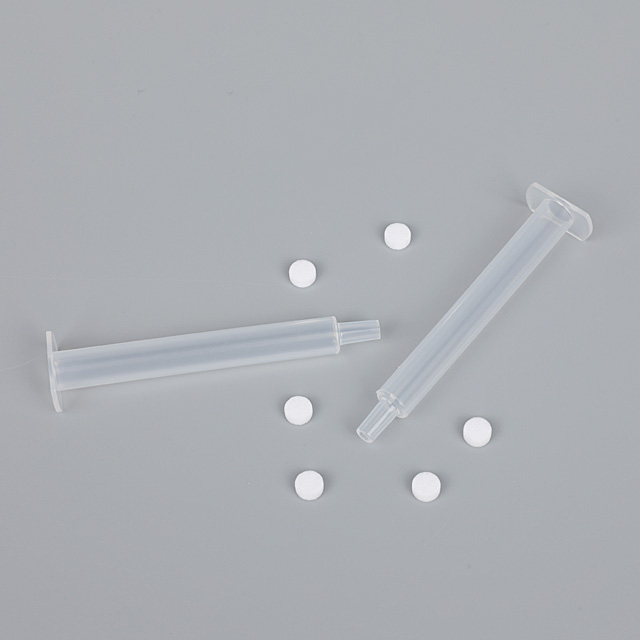
Laboratories must establish a strict baseline for consumable usage. We use standard tips exclusively for basic sample preparation. Conversely, you should reserve filtered models strictly for amplification, RNA handling, and infectious disease workflows. Mixing these protocols introduces unnecessary risk to sensitive assays.
Sometimes you need a hybrid solution. We recommend combining low-retention walls and a pipette tip filter for specific challenges. Evaluate the return on investment when handling viscous enzymes. Master mixes and common detergents like Triton X-100 or Tween-20 cling stubbornly to standard plastic. Low-retention surfaces repel these fluids. They ensure maximum sample recovery and improve overall dispensing precision.
Volume considerations play a major role in tip selection. Deep-well plates require extended-length designs to reach the bottom safely. Microcentrifuge tubes pose similar clearance challenges. We specify longer profiles to prevent the pipette shaft from touching the tube walls. This physical separation prevents direct shaft-to-tube contamination events.
Workflow Type | Recommended Tip Configuration | Primary Justification |
|---|---|---|
Basic Sample Prep | Standard Unfiltered | Cost-effective for non-sensitive liquid transfers. |
qPCR / NGS Setup | Filtered | Prevents aerosol carryover into the pipette shaft. |
Viscous Enzymes / Detergents | Low-Retention Filtered | Maximizes recovery of sticky reagents and blocks aerosols. |
Deep-Well Plates | Extended-Length Filtered | Prevents physical contact between shaft and tube walls. |
Filter material and porosity determine operational safety. You must specify virgin, medical-grade high-density polyethylene (HDPE). We require hydrophobic filter pipette tips to repel moisture effectively. These dense matrices block dangerous aerosols completely. Crucially, they do not absorb the liquid if you accidentally over-pipette your sample.
Certain manufacturing choices introduce severe risks. Avoid filters containing cellulose materials. Do not use sealing additives like carboxymethyl cellulose. These substances swell upon liquid contact to block airflow. However, they also leach chemicals into your sample. These leached chemicals heavily inhibit PCR enzymes and ruin downstream reactions.
Resin purity standards require strict verification. Check the tip body specifications carefully. It must utilize 100% virgin polypropylene. This prevents oleamide or DiHEMDA leaching during prolonged sample contact. These chemical slipping agents frequently interfere with sensitive fluorescence readings.
You must understand biological purity validation. A massive difference exists between "pre-sterilized" and genuinely certified sterile filter pipette tips. We establish a strict baseline compliance requirement for our procurement teams. This includes ISO-certified cleanroom manufacturing and e-beam or gamma irradiation. It also demands strict threshold limits on endotoxins (pyrogens), ATP, RNase, and DNase.
Contaminant | Acceptable Limit | Impact on Assay |
|---|---|---|
RNase | None detected | Rapidly degrades fragile RNA templates. |
DNase | None detected | Cleaves DNA targets prior to amplification. |
Endotoxins | < 0.05 EU/mL | Alters cell culture viability and biological responses. |
Human DNA | None detected | Causes false positives in forensic or clinical PCR. |
Laboratories frequently face the universal fit dilemma. Micro-leaks commonly occur at the pipette-tip cone interface when using generic brands. Injection molding tolerances vary wildly between manufacturers. These minor dimensional variations severely impact the physical seal. Consequently, poor seals alter the aspiration volume and ruin assay precision.
Introducing a dense barrier alters the internal air cushion. The barrier material naturally restricts airflow during liquid aspiration. You must verify pipette calibration according to ISO 8655 guidelines. Heavy filtration demands recalibration to maintain accurate dispensing volumes. Never assume a new brand will perform identically to your old one.
Packaging design directly impacts lab ergonomics. Rack rigidity matters immensely for multichannel pipetting. Flimsy racks bend under downward pressure, causing uneven tip seating. Automated liquid handling systems demand perfect compatibility. Robotic arms require exceptionally strict rack dimension tolerances to prevent system crashes during automated tip loading.
Never purchase bulk laboratory consumables without conducting physical trials first. We outline a standardized lab test protocol for our technical teams. You should follow these specific sequential steps to validate new options:
Load the new samples onto your existing laboratory pipettes.
Check the ejection force to ensure comfortable ergonomics and prevent repetitive strain injuries.
Run a standard curve qPCR assay using the new consumables.
Compare the Cq values against your historical baseline data.
This validation confirms you have no hidden enzyme inhibition or volume discrepancies. Once technical validation passes, focus on quality control documentation. Instruct your procurement team to demand a lot-specific Certificate of Analysis (CoA). You must receive this prior to final vendor approval. Ensure they supply highly reliable filter pipette tips for every single shipment.
Finally, evaluate supply chain resilience. Assess vendor lead times carefully during the shortlisting phase. Look for partners offering secondary manufacturing sites. Demand solid stock guarantees to support your high-volume consumption safely.
Specifying appropriate laboratory consumables represents a major risk-management decision. It is never just a simple commodity purchase driven by unit price. The right consumable actively protects sample integrity across thousands of runs. It extends your expensive equipment lifespan by blocking corrosive aerosols. Ultimately, it ensures absolute data validity for your clinical or research outcomes.
You should take immediate action to secure your workflows. Audit your current PCR controls today to identify potential aerosol carryover. Request technical specification sheets and lot-specific CoAs from your trusted suppliers. Finally, order a sample pack immediately to begin internal laboratory validation.
A: High-quality models maintain the necessary air cushion integrity for accurate dispensing. However, switching brands may require pipette recalibration due to slight internal pressure differences. You should always validate new consumables against your existing baseline data before full implementation.
A: Generally, no. Autoclaving can warp the plastic housing and alter the hydrophobic properties of the internal barrier. The high heat can also cause the porous material to block completely. You should always specify pre-sterilized models for sensitive work.
A: Self-sealing filters contain chemical additives that swell and block airflow entirely when touched by liquid. This prevents sample recovery. Standard hydrophobic filters block aerosols efficiently but still allow you to recover over-aspirated liquids safely.
A: Best practice dictates reviewing the CoA for every single new lot number you receive. This habit ensures continuous, verifiable compliance with all RNase, DNase, and endotoxin-free manufacturing claims.