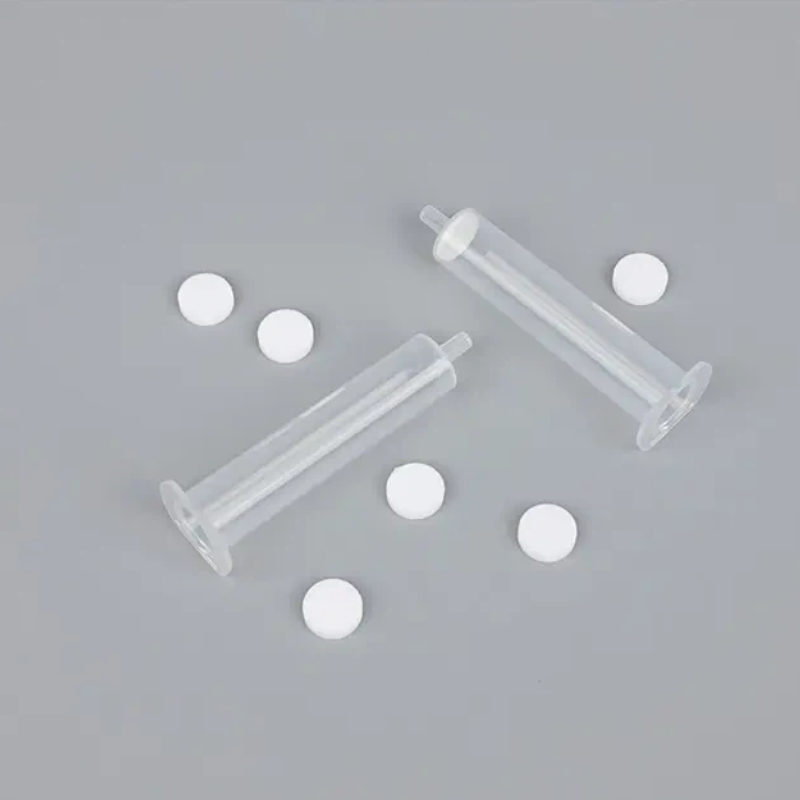
In the realm of analytical chemistry, sample preparation is the foundation of reliable results. Among the countless components that contribute to successful solid phase extraction (SPE), column frits stand out as a critical yet often overlooked element. These small porous discs play a pivotal role in maintaining the integrity of the SPE process, ensuring consistent flow rates, protecting sorbents, and ultimately safeguarding the accuracy of your analytical data. Whether you’re working in environmental monitoring, pharmaceutical development, food safety testing, or life sciences research, understanding the importance of high-quality SPE column frits is essential for elevating your laboratory workflows.
What Are SPE Column Frits and Why Do They Matter?
SPE column frits are porous filtration components strategically placed at the inlet and outlet of SPE columns, cartridges, or multi-well plates. Their primary function is to provide stable support for the stationary phase (sorbent) while enabling controlled passage of sample solutions, solvents, and eluents. Without high-performance frits, the entire SPE process is compromised:
Sorbent Retention: Frits prevent sorbent particles from escaping the column during extraction, which would contaminate samples and skew analytical results. This is particularly critical for small-particle sorbents used in high-efficiency extractions.
Flow Rate Control: Consistent flow rates are vital for reproducible extraction kinetics. Premium frits ensure uniform fluid passage, avoiding channeling or uneven flow that can lead to incomplete analyte retention or elution.
Sample Protection: By acting as a pre-filtration barrier, frits trap particulate contaminants in samples, preventing column clogging and extending the lifespan of both the SPE column and downstream analytical equipment (e.g., HPLC, GC systems).
Analyte Integrity: High-quality frits minimize nonspecific adsorption of analytes, especially sensitive biomolecules like nucleic acids and proteins, ensuring maximum recovery and accurate quantification.
Key Materials: Choosing the Right Frit for Your Application
The performance of SPE column frits is heavily dependent on their material composition. Different materials offer unique properties tailored to specific applications, solvent compatibility, and sample matrices. Here are the most common and effective frit materials:
1. Ultra-High Molecular Weight Polyethylene (UHMW-PE)
UHMW-PE is the gold standard for most SPE applications, thanks to its exceptional chemical resistance, low water absorption (<0.01%), and uniform particle size distribution. It is compatible with a wide range of organic solvents, acids, and bases, making it ideal for general-purpose extraction. Biocomma® uses only 10% of ultra-high-quality UHMW-PE raw materials to produce frits, ensuring consistent flow rates and reliable sorbent support across batches .
2. Polytetrafluoroethylene (PTFE)
PTFE frits offer superior chemical inertness, resisting even the harshest solvents. They are particularly suited for applications involving aggressive matrices or when analyzing compounds like plasticizers, where minimal interference is critical. PTFE frits are often paired with glass column tubes to avoid leaching contaminants .
3. Glass Fiber
Glass fiber frits excel in high-temperature SPE applications and are highly resistant to acids, bases, and most organic solvents. They have low adsorption for biological macromolecules, making them suitable for sample preparation in life sciences and environmental analysis. Macherey-Nagel’s glass fiber frits are designed for use with empty glass SPE columns, providing reliable sorbent support for custom packing .
4. MaxPeak High Performance Surfaces (HPS)
For biotherapeutic applications (e.g., nucleic acid or protein purification), MaxPeak HPS frits are a game-changer. These frits feature a hybrid organic/inorganic surface on a corrosion-resistant metal base, eliminating nonspecific adsorption. Testing shows 100% recovery of 23 kbp dsDNA ladders, even at high back pressures (~9,000 psi), compared to just 20-69% recovery with traditional stainless steel frits .
5. Quartz
Quartz frits are made from high-purity quartz glass, offering excellent thermal stability and chemical resistance. They are used in specialized applications such as high-temperature gas filtration, gas diffusion, and sample preparation for HPLC/GC in harsh environments .
Critical Features of High-Quality SPE Column Frits
Not all frits are created equal. When selecting SPE column frits, look for these key features to ensure optimal performance:
Precision Dimensions: Frits must have tight diameter tolerances to fit perfectly with column tubes. A mismatch can reduce porosity (e.g., a 0.2 mm reduction in diameter for a 9.0 mm frit with 40% porosity can lower porosity to 37.24%) and disrupt flow rates .
Uniform Porosity: Consistent pore size distribution (ranging from <20 μm for small-particle sorbents to 80-100 μm for gravity-flow applications) ensures even flow and prevents channeling .
Low Extractables: High-purity raw materials minimize leachable contaminants, which is critical for high-sensitivity analyses (e.g., trace-level environmental testing or pharmaceutical impurity detection) .
Batch-to-Batch Consistency: Rigorous quality control, such as ERP-managed production processes, ensures that flow rates and performance are consistent across every batch .
Customizability: The ability to tailor frits by size, thickness, porosity, and surface treatment (hydrophilic/hydrophobic) allows for compatibility with diverse SPE columns (1 mL to 300 mL) and applications .
Applications: Where SPE Column Frits Shine
High-performance SPE column frits are integral to a wide range of analytical applications:
Environmental Monitoring: Extracting and purifying pollutants (e.g., pesticides, heavy metals) from water, soil, and air samples. Glass fiber or UHMW-PE frits are preferred for their chemical resistance and low adsorption .
Pharmaceutical Development: Purifying drug candidates, analyzing impurities, and testing biotherapeutics (e.g., nucleic acids, proteins). MaxPeak HPS frits ensure maximum analyte recovery and minimal nonspecific binding .
Food Safety Testing: Detecting contaminants (e.g., mycotoxins, antibiotics, pesticides) in food and beverage samples. PTFE and UHMW-PE frits are ideal for their compatibility with organic extraction solvents .
Nucleic Acid Purification: Separating DNA/RNA from cell lysates. Hydrophilic frits are used for purifying particulate DNA, while hydrophobic frits facilitate solid-liquid separation in bacterial lysates (often replacing centrifugation steps) .
High-Throughput Automation: Supporting multi-well SPE plates for high-volume sample processing. Frits with consistent flow rates ensure reproducibility across hundreds of samples .
Troubleshooting Common SPE Frit Issues
Even with high-quality frits, issues can arise. Here are common problems and their solutions:
Column Clogging: Caused by unfiltered particulates in samples. Solution: Pre-filter samples with a 0.5 μm filter or use guard columns to protect frits .
Low Analyte Recovery: Often due to nonspecific adsorption on metal frits. Solution: Switch to MaxPeak HPS or polymer frits for biomolecule applications .
Inconsistent Flow Rates: Result of poor frit-column fit or uneven porosity. Solution: Choose frits with tight dimensional tolerances from reputable suppliers .
Contamination: Leachable compounds from low-quality frits. Solution: Select frits made from high-purity materials (e.g., UHMW-PE, PTFE) with low extractables .
Choose the Right SPE Column Frits for Your Workflow
The success of your SPE process depends on selecting frits that align with your column size, sorbent type, sample matrix, and analytical goals. Whether you need general-purpose UHMW-PE frits, chemically inert PTFE frits, high-temperature glass fiber frits, or specialized MaxPeak HPS frits for biotherapeutics, partnering with a trusted supplier ensures you get consistent, high-performance components.
At [Your Brand Name], our SPE column frits are engineered with precision using premium raw materials and rigorous quality control processes. We offer a full range of customizable options to fit any SPE column or application, from 1 mL cartridges to 300 mL columns and 96-well plates. Our frits deliver reliable sorbent support, consistent flow rates, and minimal analyte interference—helping you achieve accurate, reproducible results every time.
Ready to elevate your sample preparation? Contact our team today to learn more about our SPE column frits or to request a custom solution tailored to your laboratory’s needs.