close
Choose Your Site
Global
Social Media


In today's industrial world, noise reduction plays a vital role in maintaining a safe and comfortable working environment. Whether it’s for machinery, pneumatic systems, or automobile engines, controlling noise is essential for worker safety, productivity, and overall system efficiency. Plastic mufflers have emerged as a versatile solution to meet these noise control demands. With the increasing use of polymer technology, these mufflers provide an innovative, cost-effective, and efficient approach to reducing noise levels across various industrial settings.
This article explores what a plastic muffler is, how it works, its various applications, and why it is becoming a preferred choice for noise control. We'll also discuss related components, such as the plastic silencer and muffler filter element, that contribute to noise reduction in different environments.
A plastic muffler is a noise reduction device that uses advanced polymer materials to reduce the sound produced by equipment, machinery, or exhaust systems. It works by absorbing sound waves and controlling the airflow to reduce the overall noise generated by a system. Unlike traditional metal mufflers, which are made of steel or aluminum, plastic mufflers are constructed from durable, lightweight polymers such as polyethylene (PE), polypropylene (PP), and high-density polyethylene (HDPE).
The key advantage of plastic mufflers is their ability to offer significant noise reduction while being resistant to corrosion, lightweight, and easy to install. This makes them an ideal solution for many industrial, automotive, and even household applications.
There are different types of plastic mufflers depending on the application, size, and noise reduction requirements. Some of the common types include:
Durable Plastic Silencers: These mufflers are made from tough polymer materials that are designed to withstand the harsh conditions of industrial environments. They are perfect for use in air compressors, vacuum pumps, and other machinery where durability is essential.
Microporous Structure Noise Equipment Plastic Silencers: These mufflers feature a microporous structure that allows for even greater noise attenuation. The porous material absorbs sound waves and reduces noise by diffusing the sound energy, making it ideal for environments with high noise levels.
Plastic Muffler Filter Elements: These mufflers combine filtration and noise reduction, offering both air purification and sound dampening. They are commonly used in pneumatic systems and air compressors, where both clean air and noise control are required.
A plastic muffler works by utilizing various noise-reducing principles to lower the overall sound emitted from an exhaust or airflow system. The core technology behind the muffler is its ability to absorb and dissipate sound energy, converting it into heat energy that is less harmful to the environment. Here’s a deeper look at how plastic mufflers work:
Plastic mufflers reduce noise through a combination of methods, including:
Sound Absorption: The material of the muffler, such as polyethylene or polypropylene, absorbs sound waves. The porous structure of the plastic helps trap the sound energy, preventing it from escaping into the surrounding environment. This is why microporous structure plastic silencers are particularly effective at noise attenuation.
Sound Diffusion: The design of the muffler allows sound waves to scatter and dissipate. By disrupting the direct path of the sound waves, the muffler reduces the intensity of the sound emitted from the source.
Flow Restriction and Pressure Equalization: Some mufflers work by adjusting the airflow, creating a controlled flow of air that minimizes sound generation. This method is commonly used in muffler filter elements, where airflow through the muffler is both filtered and silenced.
Muffler filter elements serve a dual purpose: they reduce noise while also filtering air or gas. This makes them an essential component in pneumatic systems, air compressors, and exhaust systems. The combination of sound attenuation and filtration makes plastic mufflers highly versatile and useful in applications where both functions are required.
In these systems, the muffler filter element helps in removing particles from the air while also ensuring that noise levels are kept to a minimum. The polymer materials used in the muffler element are resistant to corrosion, ensuring long-lasting performance even in demanding environments.
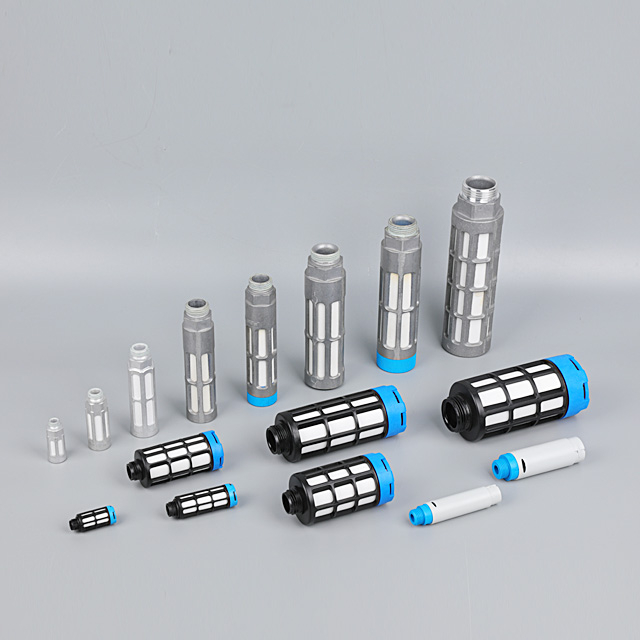
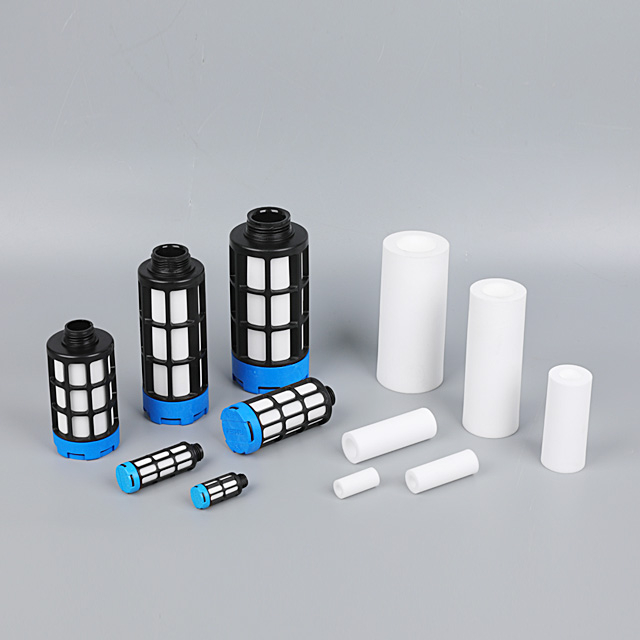
Plastic mufflers are used across a wide range of industries due to their superior noise reduction properties, light weight, and resistance to corrosion. Below are some key applications where plastic mufflers play a crucial role in noise control:
One of the most common applications of plastic mufflers is in pneumatic systems, where air-powered equipment generates high noise levels. These systems include air compressors, pneumatic tools, and valves. In such applications, plastic silencer technology helps reduce the noise produced during the operation of these systems. Whether used in small industrial equipment or large-scale pneumatic machinery, plastic mufflers are effective at maintaining a quieter working environment.
In industrial settings, machinery and equipment often produce significant noise during operation. Plastic mufflers are used to reduce the noise emitted by equipment such as pumps, vacuum systems, and conveyor belts. By installing plastic mufflers on these systems, manufacturers can meet workplace safety regulations, improve employee comfort, and enhance productivity.
Additionally, plastic mufflers are commonly used in automated systems, where noise from machines can disrupt the flow of work. These mufflers are designed to be both lightweight and durable, making them suitable for high-performance applications.
Plastic mufflers are ideal for use in chemical processing and harsh environments due to their resistance to corrosion. Unlike metal mufflers, which can degrade over time in aggressive chemical environments, plastic mufflers retain their performance in such settings. They are commonly used in chemical plants, refineries, and other industrial facilities where noise control is needed without sacrificing durability.
In automotive applications, plastic mufflers are used to reduce the noise produced by exhaust systems. While metal mufflers are still commonly used in many vehicles, plastic mufflers are gaining popularity due to their lighter weight and resistance to rust and corrosion. Plastic silencer technology is also being integrated into automobile battery systems, where noise from battery ventilation systems can be effectively controlled.
Plastic mufflers offer several key benefits that make them an attractive choice for noise control applications:
Plastic mufflers are much lighter than their metal counterparts, making them easier to install and less burdensome on equipment. Their durability is also a significant advantage, as they resist corrosion and degradation in harsh environments. This makes them ideal for long-term use in industrial applications, where maintenance and replacement can be costly.
Compared to traditional metal mufflers, plastic mufflers are more cost-effective to manufacture and maintain. The materials used in plastic mufflers are less expensive, and their lightweight nature reduces shipping and installation costs. This makes them an attractive option for businesses looking to reduce overhead expenses without compromising on quality.
One of the primary benefits of plastic mufflers is their resistance to corrosion. Unlike metal mufflers, which can rust and degrade over time, plastic mufflers maintain their effectiveness even in wet or chemically aggressive environments. This makes them ideal for use in industries like food processing, chemicals, and wastewater treatment.
The installation process for plastic mufflers is relatively simple, as they are lightweight and easy to handle. Maintenance is also straightforward, as they can be cleaned or replaced without the need for specialized tools or expertise.
To ensure that plastic mufflers continue to function effectively, regular maintenance is essential. Here are some best practices for maintaining these noise control devices:
Check the plastic muffler periodically for any signs of wear, cracks, or damage. A damaged muffler may not be able to perform its noise reduction function effectively, so it’s important to inspect it regularly.
If the plastic muffler is part of an air filtration system, it is essential to remove any debris that may accumulate within the muffler. Cleaning the muffler ensures that it continues to provide optimal airflow and noise reduction.
If the plastic muffler shows signs of deterioration or has exceeded its recommended lifespan, it should be replaced immediately. This ensures that your noise control system remains effective and your equipment operates efficiently.
In conclusion, plastic mufflers are a highly effective and versatile solution for reducing noise across various industrial, automotive, and commercial applications. Their lightweight construction, durability, and resistance to corrosion make them ideal for use in demanding environments where noise control is essential. Whether used in pneumatic systems, industrial equipment, or automobile applications, plastic mufflers provide a cost-effective and reliable means of reducing noise and ensuring a safer, more comfortable working environment.
At KAHO, we specialize in pioneering plastic mufflers and plastic silencers designed to meet the highest industry standards. Our products offer unparalleled efficiency in noise reduction, providing you with an elevated standard in noise control for your industrial systems. To learn more about our cutting-edge solutions and how they can help reduce noise in your systems, visit our website or contact our experts today.
1. What is the difference between a plastic muffler and a metal muffler?
The primary difference is that plastic mufflers are lighter, corrosion-resistant, and cost-effective compared to traditional metal mufflers, making them suitable for various industrial and automotive applications.
2. How do plastic mufflers reduce noise?
Plastic mufflers reduce noise by using a combination of sound absorption, diffusion, and flow restriction. The porous material absorbs sound waves, while the muffler's design scatters and reduces the intensity of the noise.
3. Can plastic mufflers be used in high-temperature environments?
Yes, plastic mufflers made from heat-resistant polymers such as polypropylene (PP) or polyethylene (PE) can withstand high temperatures, making them suitable for various industrial applications.
4. Are plastic mufflers easy to install?
Yes, plastic mufflers are lightweight and easy to install, reducing installation time and labor costs compared to heavier metal mufflers.
5. How often should a plastic muffler be replaced?
The replacement frequency depends on the application, but regular inspections should be carried out to check for damage or wear. Typically, plastic mufflers should be replaced every 1 to 2 years, depending on the environment and usage.