close
Choose Your Site
Global
Social Media
Views: 0 Author: Site Editor Publish Time: 2026-05-18 Origin: Site


Effluent treatment is a critical process in protecting our environment and ensuring that wastewater, whether from industrial or municipal sources, meets safety and regulatory standards before being released into natural water bodies. As water scarcity becomes an increasing concern globally, more industries are turning to water reclamation technologies to ensure that treated wastewater can be reused. Suzhou Kaihong Polymer Technology Co., Ltd., with its advanced TVF microfiltration membrane modules, offers an effective solution to tackle these challenges, providing high-quality filtration for both industrial and municipal sewage systems.
The TVF (Tubular or Multi-tube) microfiltration membrane module is a type of filtration system that utilizes hollow fiber membranes arranged in a tube-like configuration. These modules are designed to efficiently remove suspended solids, particles, bacteria, and other contaminants from water while allowing water to pass through with minimal resistance. The modular design provides flexibility in various treatment applications, allowing for easy scaling and installation in different filtration systems.
Compared to other membrane materials and structures, such as PVDF or TWF, the TVF design offers enhanced stability and durability, making it suitable for high-performance filtration. The structure's simplicity also allows for easier maintenance, as it is less prone to fouling compared to more complex filtration systems. With their high flow rate and robust design, TVF modules are particularly effective in handling large volumes of water, which is crucial for both municipal and industrial wastewater treatment plants.
One of the key challenges in treating wastewater, especially in industrial settings, is dealing with high concentrations of suspended solids. TVF microfiltration membrane modules excel in this area due to their high dirt-holding capacity and robust design. The tube-shaped configuration helps to prevent clogging by allowing solids to be more easily removed during cleaning cycles. This makes the TVF module particularly effective in environments where wastewater contains fluctuating concentrations of solids.
Industrial wastewater often contains a variety of contaminants, including heavy metals, oils, and organic compounds, as well as varying pH levels and high turbidity. The TVF modules are highly adaptable to these changing characteristics, providing consistent and reliable filtration performance even under demanding conditions. Whether the wastewater comes from the chemical, food processing, or textile industries, TVF membranes ensure that contaminants are effectively removed, meeting environmental discharge regulations.
TVF microfiltration modules are designed for continuous operation, making them suitable for both municipal sewage treatment and industrial effluent systems. The stability of their flux and permeability ensures that the modules can operate efficiently for long periods, minimizing downtime and maintenance requirements. Modular design also allows for easy replacement of individual units, further reducing operational disruptions and ensuring a long service life for the entire system.
In industrial applications, the quality of effluent is of paramount importance to ensure compliance with local environmental regulations. TVF microfiltration membranes are used in various industries, including chemicals, textiles, food and beverage, and manufacturing, to treat wastewater that may contain oils, suspended solids, heavy metals, and organic compounds. These modules ensure that treated water is free of contaminants, making it safe for discharge or even reuse in industrial processes.
TVF modules play a crucial role in municipal sewage treatment plants. In the tertiary treatment stage, after biological and chemical treatment, the TVF membranes serve as a polishing step to remove any remaining suspended solids, bacteria, or other impurities. This helps to ensure that the effluent meets strict water quality standards before it is either discharged into natural water bodies or reused for non-potable applications such as irrigation or industrial cooling.
As water scarcity becomes a more pressing issue globally, the need for water reclamation has risen. TVF microfiltration membrane modules are an essential component of water reclamation systems. After treating municipal or industrial wastewater with TVF membranes, the water can be reused for non-potable purposes such as irrigation, industrial cooling, or even cleaning. By enabling the reuse of treated wastewater, TVF membranes contribute to sustainable water management practices and reduce the strain on freshwater resources.
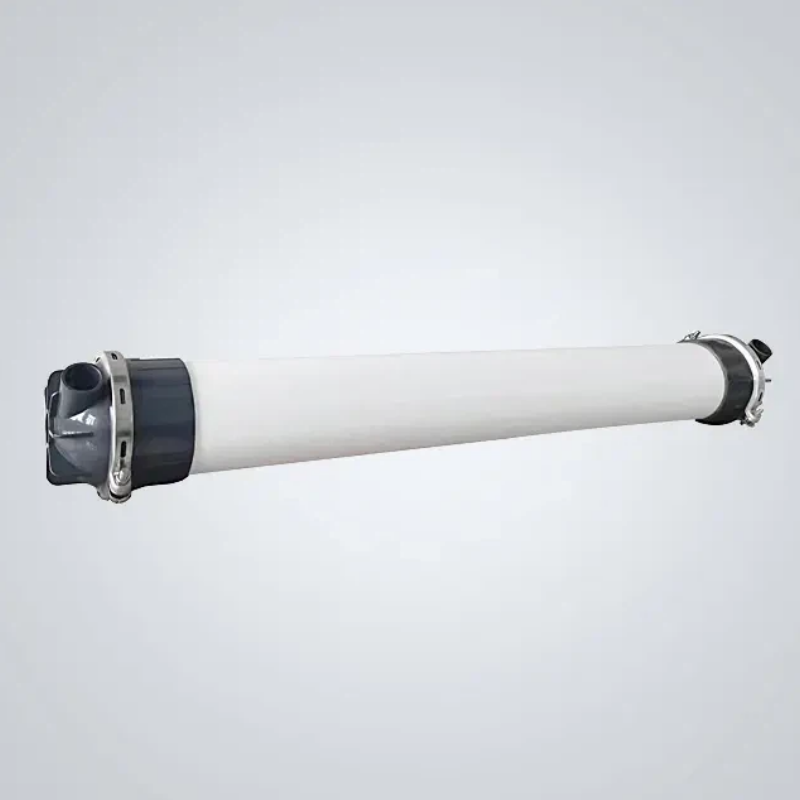
When designing a filtration system using TVF microfiltration modules, engineers must consider various factors such as the quality and volume of influent water, as well as the required effluent quality. A proper pretreatment process, including screening and settling, is essential to reduce the load on the membrane system and minimize fouling. Additionally, the number of modules and their configuration should be determined based on the desired flow rate and treatment capacity.
Maintenance is a key factor in ensuring the long-term performance of TVF microfiltration membranes. Regular cleaning cycles are necessary to remove fouling materials and restore the membrane’s efficiency. The transmembrane pressure (TMP) should be monitored to detect any potential issues with the membranes, such as blockages or performance degradation. Membrane integrity checks are essential to ensure that the system operates at optimal levels, preventing any cross-contamination or water quality issues.
In many cases, TVF membranes are used as part of a multi-stage water treatment process. For example, after filtration, the treated water may undergo additional processes such as disinfection or reverse osmosis (RO) to further purify the water. TVF modules can be easily integrated into these downstream treatment systems, providing an effective pre-filtration step that reduces the load on more advanced treatments like RO, improving overall system efficiency and reducing operational costs.
One of the primary advantages of TVF microfiltration membranes is their low operational cost. Unlike chemical-heavy treatments that require continuous chemical dosing or high-pressure systems like ultrafiltration or nanofiltration, TVF membranes operate efficiently without requiring expensive chemicals or high energy input. This results in significant cost savings over time, especially in large-scale industrial or municipal treatment plants.
The compact, modular design of TVF microfiltration modules makes them ideal for facilities where space is limited. Additionally, the modular nature of the system allows for easy expansion as treatment needs grow. Whether upgrading an existing system or designing a new one, engineers can scale the filtration system by simply adding more modules, making TVF systems highly adaptable to changing water treatment demands.
Due to the high durability of TVF membranes and their ability to handle high suspended solids loads, fouling is minimized, reducing system downtime. The modular design also means that individual modules can be easily replaced without requiring significant disruption to the entire system. This results in improved system uptime and better long-term return on investment.
TVF microfiltration membrane modules offer a highly effective, reliable, and cost-efficient solution for treating industrial effluent, sewage, and reclaimed water. Their robust design, ability to handle a wide range of contaminants, and adaptability to varying operational conditions make them an ideal choice for wastewater treatment systems. By utilizing TVF modules, industries and municipalities can ensure that their effluent meets stringent water quality standards, while also contributing to sustainable water management practices. If you are looking to improve your wastewater treatment processes, contact us today for tailored solutions.
1. What are TVF microfiltration membrane modules?
TVF microfiltration membranes are tubular modules designed to efficiently remove suspended solids, bacteria, and other contaminants from water, ensuring high-quality effluent for discharge or reuse.
2. How do TVF membranes differ from other filtration methods?
Compared to sand or granular filters, TVF membranes provide higher precision and require less maintenance, while operating at lower energy consumption and pressure than ultrafiltration or nanofiltration systems.
3. Can TVF modules handle industrial effluent?
Yes, TVF microfiltration membranes are specifically designed to handle industrial effluent, including heavy metals, oils, and other contaminants, making them suitable for a wide range of industries.
4. How do TVF modules contribute to water reclamation?
By effectively filtering sewage and industrial wastewater, TVF membranes enable the reuse of treated water for non-potable purposes such as irrigation and industrial cooling, promoting water conservation and sustainability.